Garage door seal types vary by shape, retainer, and door fit. A bottom seal closes the gap below the door and helps block rain, wind, dirt, and pests. The right seal must match the door and retainer. A good fit also helps the door close safely without rubbing or binding.
A worn seal can leave a garage damp, cold, or dirty. Water may collect near the floor after rain, and small pests may enter through the gap. Replacing the seal can help, but some problems point to a larger door issue.
Table of Contents
- What does a bottom garage door seal do?
- What are the main garage door seal types?
- How do you choose the right bottom seal for your garage door?
- What is a garage door threshold seal and when do you need one?
- How can you replace a garage door bottom seal?
- How do you stop water from getting under a garage door?
- How do you maintain garage door seals throughout the year?
- Frequently Asked Questions
What does a bottom garage door seal do?
A bottom garage door seal fills the space between the door and floor. It helps keep out rain, wind, dust, leaves, and insects. The seal also cushions the door as it closes. It should touch the floor across the full width without being crushed or folded.
How the seal protects against water, drafts, and pests
The seal makes a flexible barrier along the lower edge. During rain, it helps guide water away from the garage opening. It also limits air movement, which can make the space more comfortable. A sealed opening gives mice, roaches, and other pests fewer easy ways inside.
A seal cannot fix a sloped floor or poor drainage. Water may still enter when the driveway slopes toward the garage. In that case, a threshold seal or drainage change may work better. The door must also sit level when closed.
Signs your existing bottom seal is no longer working
A seal may need attention when it becomes hard, cracked, torn, or flat. Light showing beneath the door is another clear warning. The seal may also pull away from the retainer or bunch up on one side.
Common signs include:
- Water or leaves collecting inside after rain.
- A clear gap beneath part of the closed door.
- Strong drafts around the lower edge.
- Dirt marks passing beneath the door.
- The seal dragging, folding, or coming loose.
Sikeston Garage Door Repair can help homeowners tell the difference between a worn seal and a door that needs adjustment. A damaged bottom seal is often easy to spot. A door that sits unevenly may need a closer look before a new seal is fitted.
What are the main garage door seal types?
The main garage door seal types include U-shaped, T-style, beaded, and bulb designs. Each fits a certain retainer or channel on the door. The shape matters because a seal that does not match may slide out or leave a gap.
U-shaped and T-style bottom seals
A U-shaped seal wraps around the lower edge or slides into a matching holder. It is common on doors with a bottom retainer. The retainer holds the rubber or vinyl seal as the door moves.
A T-style seal has narrow tracks called T-ends. These slide into matching channels. The channel size and spacing must match the replacement seal. A T-style seal may look right but still fail if its tracks are too wide or narrow.
Beaded, bulb, and retainer-specific seal designs
Beaded seals use round edges that fit into a special retainer. Bulb seals have a rounded lower part that presses against the floor. Some doors use a retainer made for one seal shape only. The door material, retainer shape, and floor gap all affect the choice.
Seal materials also differ. Rubber often stays flexible through changing weather. Vinyl is common and may feel lighter or stiffer. Check the old seal and retainer before ordering a replacement.
The phrase garage door weather stripping side and top means seals placed along the door frame. These seals close gaps around the edges, not just beneath the door. They work with the bottom seal instead of replacing it.
How do you choose the right bottom seal for your garage door?
The right bottom seal matches the door width, retainer, channel, and floor gap. Measuring before buying helps prevent failed replacements. The seal should cover the opening, fit the holder, and touch the floor when the door is closed.
Measuring the door, retainer, and seal channel
First, inspect the lower edge with the door fully closed. Keep fingers away from moving hinges, rollers, and cables. If the old seal comes out easily, take a short piece when comparing replacement profiles.
Measure the full door width from one side to the other. Then measure the retainer opening and channel spacing. A tape measure or ruler can help. The new seal should cover the width without leaving a gap at either end.
The garage floor matters too. A smooth floor needs less seal pressure than an uneven floor. If the floor rises or dips, a threshold may help create a more even contact line. A large gap may point to door alignment or floor trouble instead of a seal problem.
Matching the seal to the door material and garage conditions
Steel, wood, and insulated doors may use different retainers. The door’s age and design can also affect the correct profile. Product packaging should list the retainer style and channel size, not only the seal length.
Think about the garage conditions as well. A damp garage may need a flexible seal that stays soft. A garage with strong sun may need a material suited to heat and weather. If the profile is unclear, a garage door repair professional can inspect the lower edge first.
Sikeston Garage Door Repair serves property owners in the main Sikeston area, from Browns and Miner to Morehouse, Vanduser, Charleston, East Prairie, and nearby communities. The team can help with seal choice, alignment, and related garage door maintenance. Choosing the right part first can prevent extra work and help the door close evenly.
What is a garage door threshold seal and when do you need one?
A garage door threshold seal is a raised strip fixed to the floor below the closed door. It makes a small barrier against water moving across the floor. A threshold can help when rain reaches the opening or the floor is slightly uneven.
How thresholds stop water beneath the closed door
The threshold sits inside the garage opening where the door meets the floor. Its sloped shape helps guide water away from the interior. The closed door presses against the raised section, making a tighter seal than the bottom seal may provide alone.
A threshold should not prevent the door from closing. It must be placed so the door touches it evenly across the opening. The floor should be clean and dry before installation. Follow the product directions for adhesive choice and placement.
A threshold cannot repair a damaged concrete slab or stop water through side walls. It also cannot fix a door that is off track or badly out of line. Those problems need separate attention.
Combining a threshold with a bottom seal
A threshold and bottom seal often work well together. The bottom seal closes the moving gap under the door. The threshold gives it a firm, raised surface to meet. This setup may help when the driveway sends water toward the garage.
The two parts must not create too much resistance. If the opener strains, the door reverses, or the lower edge bends, the setup may be too high or poorly placed. Stop using the door until the cause is checked.
For homes in Sikeston, local weather and floor shape can affect the best answer. Sikeston Garage Door Repair can inspect the opening and explain whether a new seal, threshold, drainage change, or repair is the safer next step.
How can you replace a garage door bottom seal?
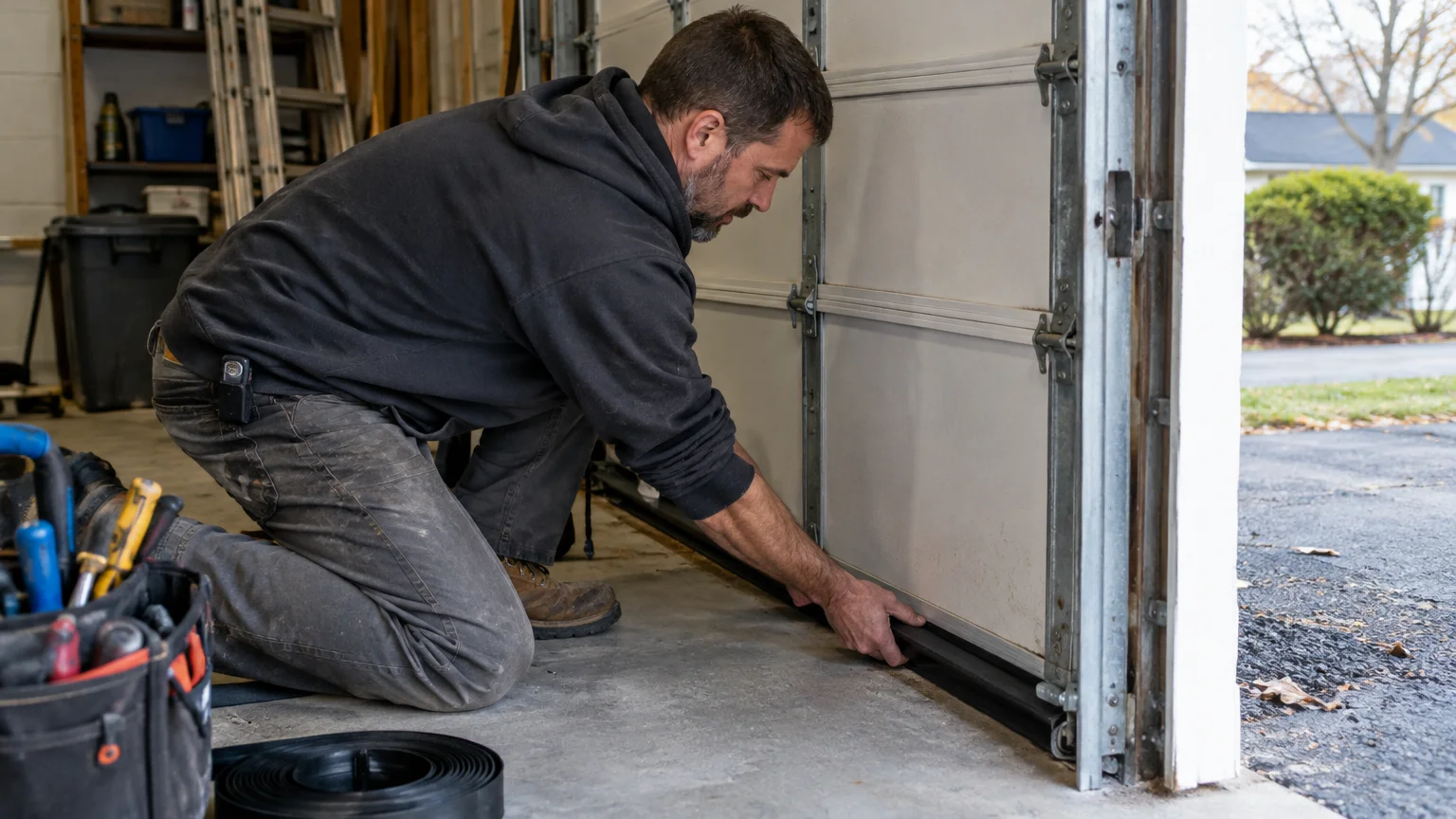
A bottom-seal replacement starts by identifying the retainer and securing the door. Remove the old seal, clean the channel, and fit the new seal without stretching it. Anyone unsure around springs, cables, or a heavy door should stop and arrange professional help.
Tools and preparation for a bottom-seal replacement
Basic supplies may include a tape measure, gloves, a screwdriver, mild cleaner, and a replacement seal. Some retainers need a lubricant approved for the seal material. Disconnect the opener only when the directions allow it and you know how to secure the door.
Do not use the opener while hands are near the lower edge. Keep children, pets, and vehicles away from the work area. Never remove spring parts or loosen cables to make the job easier. These parts can store dangerous force.
A safe step-by-step replacement process
- Close the door and identify the bottom retainer and seal profile.
- Secure the door so it cannot move during the work.
- Remove the old seal without bending or damaging the retainer.
- Clean dirt from the retainer and check for cracks or loose parts.
- Cut the new seal to the measured door width, if needed.
- Slide or press the seal into place without stretching it.
- Close the door and check for even contact with the floor.
- Test the door by hand, then use the opener from a safe distance.
The door should move smoothly and stay level. If it binds, rises unevenly, reverses, or leaves a gap, the seal may not be the only issue. Garage Door Off Track Repair, Garage Door Opener Repair, or another repair may be needed when movement is not normal.
How do you stop water from getting under a garage door?
Stopping water takes more than changing the bottom seal. Check the seal, threshold, floor slope, door alignment, and outside drainage. Water that keeps entering may come from the driveway or walls rather than the gap below the door.
Checking the floor, threshold, door alignment, and drainage
Watch where water travels during rain. Look for low spots near the opening and cracks in the concrete. Leaves and dirt can block small drainage paths and send water toward the garage.
Then check the closed door from inside. The bottom seal should touch the floor across its width. One raised corner may show an alignment problem. A threshold can help with a small floor gap, but it should not hide a serious door fault.
Check the side and top weatherstripping too. Gaps along the frame can let wind-driven rain enter even when the bottom seal works well. The seal should stay attached and should not press so tightly that the door rubs.
When weatherstripping or professional garage door repairs are needed
Weatherstripping may solve small gaps around the frame. A new bottom seal may solve a brittle or torn lower barrier. Professional service is better when the door is crooked, off track, very heavy, noisy, or unsafe to move.
A dead opener may leave the door stuck, but opener repair does not replace a worn seal. Garage door opening repair may involve the opener, tracks, rollers, springs, or cables. A trained technician can find the part that needs attention instead of treating only the visible gap.
People searching for garage door repair services near me often need quick help with access or security. Local service can help when a door will not close, will not open, or has moved off its track. Sikeston Garage Door Repair helps Sikeston property owners decide when a seal job is simple maintenance and when urgent repair is safer.
How do you maintain garage door seals throughout the year?
Garage door seals last longer when they stay clean, flexible, and seated correctly. A quick check during routine garage door maintenance can find cracks or gaps early. Check the seal after severe weather and whenever the door starts moving differently.
Cleaning, inspecting, and testing the seal
Wipe the seal with mild soap and water. Remove grit from the retainer and nearby floor. Avoid harsh chemicals that may dry or harm the seal. Let the area dry before checking for cracks, tears, or loose parts.
Close the door and look for daylight beneath it. Test the seal at several points with a thin piece of paper. It should meet the floor without being crushed. Check the side and top weatherstripping for gaps or loose sections.
Keep the floor near the opening clear. Tools, boxes, and debris can press against the seal or block the door. A clean area makes it easier to notice water, pests, or unusual wear.
When to replace the seal or call a garage door repair professional
Replace the seal when it is brittle, split, badly flat, or too short. A new seal may also help when water and drafts continue after cleaning. The replacement must match the retainer and door design.
Call a professional when the door is heavy, crooked, off track, or unsafe to test. Spring and cable problems should not be treated as a seal project. Anyone asking who services garages near me should choose a local provider that checks the whole door system.
Key takeaways
- A bottom seal closes the gap beneath a garage door.
- Garage door seal types must match the retainer and channel.
- A threshold can help when water flows across the garage floor.
- A worn seal differs from an uneven or unsafe door.
- Professional help is best for springs, cables, tracks, and heavy doors.
Conclusion
A bottom seal is small but has an important job. It helps protect the garage from water, drafts, dirt, and pests. The best replacement matches the retainer and touches the floor evenly. A threshold may add protection when water moves toward the opening.
Sikeston Garage Door Repair can help property owners review seal wear, threshold needs, and related door problems. Contact us today if the door will not close, will not open, or no longer moves safely.
Frequently Asked Questions
How long does a garage door bottom seal usually last?
Service life depends on sun, weather, traffic, floor contact, and material. A seal may wear faster in a damp or hot garage. Regular checks can find cracking, hardening, flattening, and gaps before water or pests become a larger problem.
Can a homeowner replace a garage door seal?
Many homeowners can replace a simple bottom seal when the retainer is sound and the door is secure. The work should not involve springs, cables, or track parts. If the door is heavy, crooked, or unsafe, a garage door repair professional should inspect it.
Why does water still enter after a new seal is installed?
Water may come from an uneven floor, driveway slope, side gap, or damaged weatherstripping. A threshold may help when water flows across the floor. If the door does not sit level, check the alignment problem before adding more seal material.
Are all garage door bottom seals interchangeable?
No. Garage door seal types use different shapes, retainers, channels, and sizes. A T-style seal may not fit a U-shaped retainer, and a bulb seal may need a matching holder. Measuring the old parts and door width helps prevent a wrong purchase.
When should someone call for garage door repair?
Professional help is right when the door is off track, very heavy, crooked, stuck, or making odd sounds. Opener, spring, cable, and track problems can create safety risks. A technician can decide whether the seal is the real problem or only a sign of another fault.
If you are unsure what you are dealing with, have the door checked before the problem grows. Sikeston Garage Door Repair can help you understand the next safe step.
If you are not sure what you are dealing with, it is worth having someone look at it before it turns into a bigger job. Get in touch with Sikeston Garage Door Repair today and we will tell you where you stand.